If you have been searching for myotherapy near me, you may be wondering what actually happens once you walk into the clinic. Is the first visit mostly massage? Will you need dry needling? Do you have to arrive with a diagnosis?
A useful first appointment should begin with a conversation and an assessment, not an automatic treatment routine. The aim is to understand what is bothering you, how it affects your day and whether myotherapy is a sensible option for your situation. You do not need to arrive knowing which muscle is responsible.
Your appointment starts with the story
Your myotherapist will usually ask where you feel discomfort, when it began and what makes it better or worse. A sore shoulder after gardening needs different context from a shoulder that gradually stiffened over several months. Work, training, sleep, previous injuries and recent changes in activity can all add useful clues.
Be open about relevant medical conditions, operations and medicines. Bring reports or scan results if you already have them, but do not arrange imaging solely for the appointment unless a qualified health professional has recommended it. The Victorian Government’s Better Health Channel guide to myotherapy also suggests taking relevant medical test results and reports to a first visit.
What the physical assessment may include
The assessment should relate to your concern. You might be asked to turn your neck, raise an arm, bend, squat or walk a few steps. The practitioner may check how comfortably a joint moves or gently examine muscles and surrounding soft tissue. This is not a test you can pass or fail. It gives the practitioner a starting point and helps them decide whether treatment is appropriate.
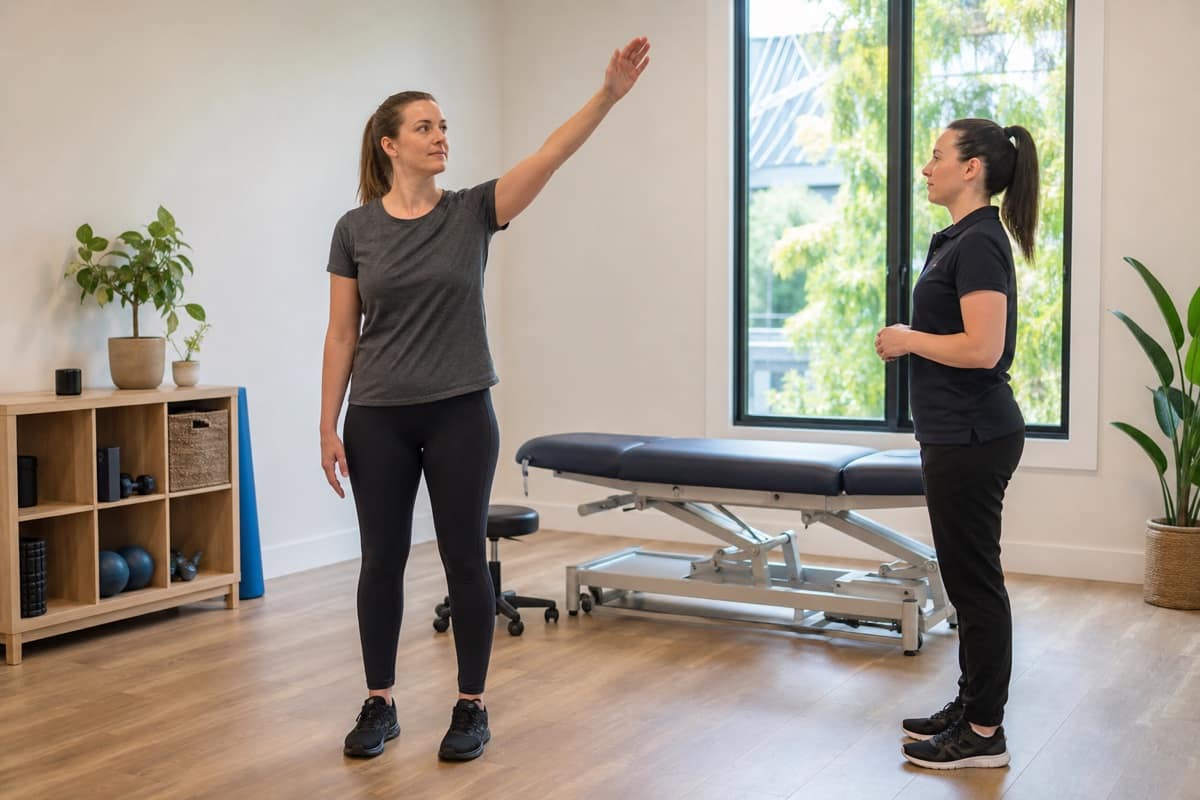
You can ask why a movement or test is being used. If something feels painful, unsteady or uncomfortable, say so straight away. Assessment can be modified or stopped. You are also free to decline any part of the appointment.
Treatment is chosen with you
Myotherapy can draw on several approaches. Depending on the findings and your preferences, these may include massage, trigger-point techniques, gentle movement, stretching, dry needling or a small number of exercises. You should not assume every technique will be used in one session.
Before treatment begins, the practitioner should explain what they propose, the expected purpose, reasonable alternatives and anything you may feel during or afterwards. Consent is ongoing. You can ask for less pressure, pause a technique or change your mind at any time. If you do not want dry needling, tell the practitioner; other options can be discussed.
Advanced Health’s myotherapy service page outlines the techniques available at the Preston clinic. The plan should still be tailored to the person in the room rather than copied from a standard list.
How to prepare for the first visit
- Wear comfortable clothing that allows you to move easily.
- Note when the problem started and the activities that change it.
- Bring relevant reports and a current list of medicines if your history is complex.
- Think about your goal: sleeping more comfortably, returning to training or managing a workday may be more useful than simply saying “fix the tight muscle”.
- Allow enough time to arrive without rushing. The new-patient information explains what to expect at the clinic.
What happens after the session?
Your myotherapist may suggest a simple movement, exercise or pacing change to try between appointments. Ask what response is expected, what would be unusual and when to follow up. Some people notice temporary tenderness after hands-on treatment, while others do not. More soreness does not prove that a treatment was more effective.
A follow-up plan should be based on your response and goals. It is reasonable to ask how progress will be measured and when the approach will be reviewed. No practitioner can guarantee a particular result or an exact number of visits.
When myotherapy should not be your first stop
Muscle and joint symptoms do not always come from a simple soft-tissue problem. Seek prompt medical advice for severe or rapidly worsening pain, marked swelling or deformity after injury, fever with unexplained pain, new weakness or numbness, or symptoms that are affecting your general health. Call 000 for chest pain, trouble breathing, collapse, signs of stroke or another emergency. Healthdirect also provides current guidance on when muscle aches and pains need medical assessment.
A myotherapist may recommend that you see a GP or another health professional if your history or assessment suggests that further investigation is needed. A referral is a responsible clinical decision, not a failed appointment.
Frequently asked questions
Do I need a GP referral?
Generally, no. You can book a myotherapy appointment directly. If you are using a specific compensation or funding pathway, check its referral and paperwork requirements before attending.
Is myotherapy the same as remedial massage?
They overlap, and both may use hands-on soft-tissue techniques. A myotherapy appointment may also place greater emphasis on physical assessment, movement, exercise and a wider range of treatment options. The most important question is whether the practitioner’s approach fits your needs and preferences.
Can I claim myotherapy on private health insurance?
Some policies provide extras benefits for myotherapy, but cover and annual limits vary. Check your current policy or ask your insurer before booking rather than assuming a rebate applies.
Booking myotherapy in Preston
Advanced Health provides myotherapy at its Preston clinic for people from Preston and nearby northern suburbs. If you are unsure whether the service suits your concern, you can contact the clinic. If you are ready to arrange a time, use the online booking page.
This article provides general information only and is not a diagnosis or a substitute for individual medical advice. A qualified health professional should assess symptoms that are severe, persistent, worsening or concerning.