Jaw tightness, clicking, morning clenching and tension-type headaches are common reasons people start looking for TMJ pain Preston information. The temporomandibular joint (TMJ) is small, but it works closely with the jaw muscles, neck, upper back and nervous system. When these areas become irritated or overloaded, symptoms can feel surprisingly widespread.
This article is a general educational guide from Advanced Health Chiropractic / Advanced Health – Chiropractor & Remedial Massage Preston at 4/107 Plenty Road, Preston VIC. It is not a diagnosis. If your jaw pain is severe, follows trauma, is associated with chest pain, facial weakness, fever, sudden neurological symptoms, or you cannot open or close your mouth properly, seek urgent medical or dental care.
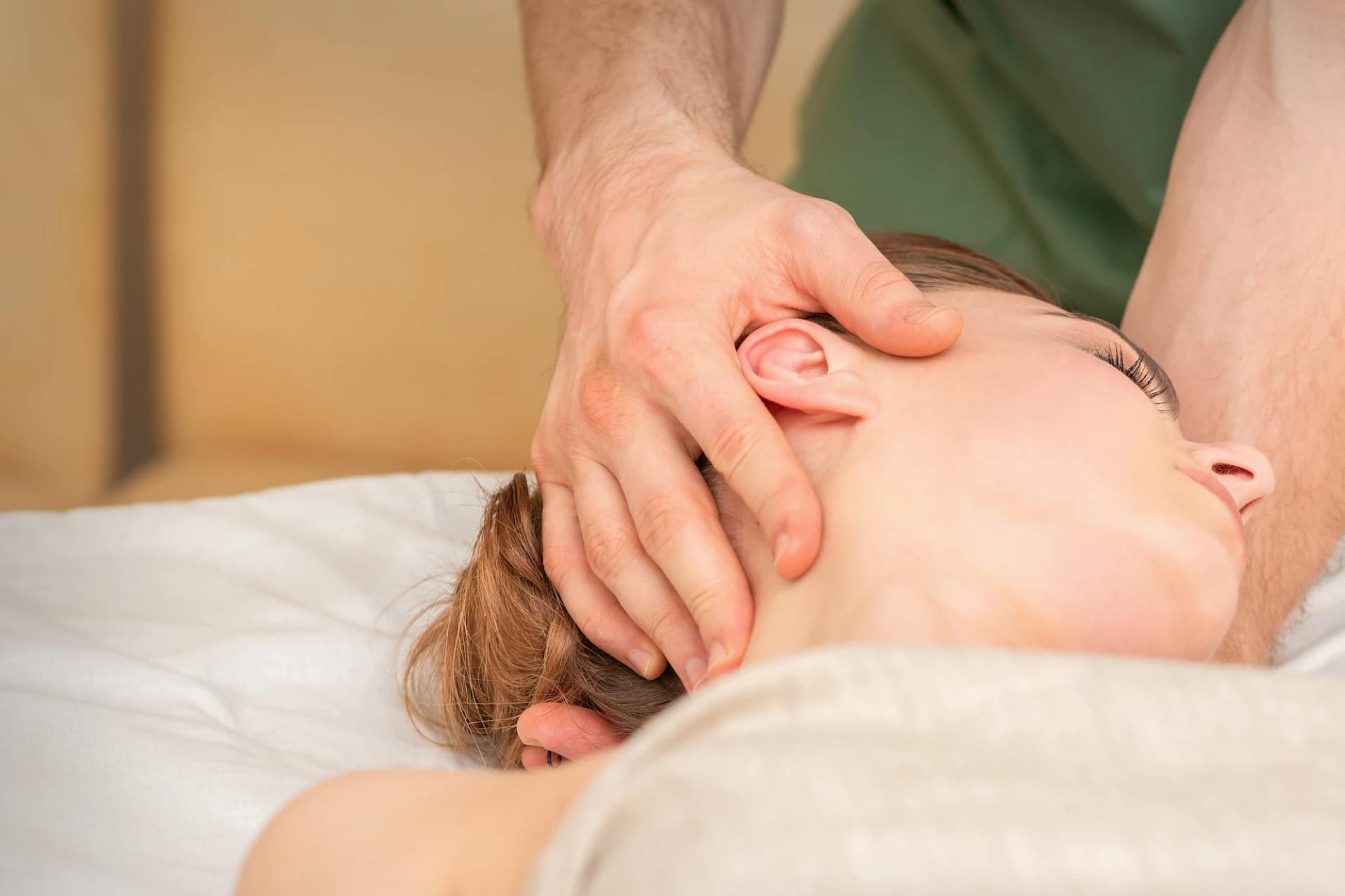
What is TMJ pain?
TMJ pain usually refers to discomfort around the jaw joint and the muscles that open, close and stabilise the jaw. People may notice:
- jaw aching, tightness or fatigue after chewing or talking
- clicking, popping or grating around the jaw joint
- difficulty opening widely or a feeling the jaw is not tracking smoothly
- temple, cheek, ear-area or neck tension
- headaches that seem to build with stress, desk posture or clenching
TMJ symptoms can have dental, medical, muscular, joint and lifestyle contributors. That is why a conservative first step is usually an assessment that considers your jaw movement, neck function, posture, training load, stress, sleep and relevant health history.
Why jaw tension and headaches can overlap
The jaw does not work in isolation. The muscles around the jaw, temples, upper neck and shoulders often respond to the same daily loads: long periods at a laptop, phone use, heavy training, poor sleep, stress, or unconscious clenching. For some people, this can contribute to a pattern of jaw tightness plus neck tension or headaches.
At Advanced Health, TMJ-related presentations may involve discussion of jaw and TMJ pain, headaches, and neck pain together. The aim is to understand the likely contributing factors and decide whether allied health care is appropriate, or whether dental or medical review should be prioritised.
When conservative TMJ care may be appropriate
Conservative care may be considered when symptoms are musculoskeletal in nature, not urgent, and linked with jaw muscle tension, neck stiffness, posture, movement habits, or clenching patterns. Depending on assessment findings, care may include:
- education about jaw habits, resting tongue position and avoiding repeated end-range opening
- gentle soft-tissue work for jaw, neck or shoulder muscle tension where appropriate
- neck and upper-back mobility or stability work
- simple home strategies to reduce aggravating loads
- coordination with your dentist, GP or other provider when symptoms suggest another contributor
Advanced Health offers chiropractic care and remedial massage in Preston, with a focus on practical, conservative management rather than promises of a quick fix.
Practical self-checks before your appointment
If symptoms are mild and non-urgent, the following observations can help your practitioner understand your pattern:
- Timing: Is jaw tension worse on waking, after work, after training, or after stressful days?
- Triggers: Does chewing gum, crusty bread, wide yawning or long calls aggravate it?
- Headache link: Do headaches appear with jaw tightness, neck stiffness or screen-heavy days?
- Clenching signs: Do you catch your teeth touching when you are not eating?
- Range: Can you open comfortably, or does the jaw deviate, lock or feel guarded?
Bring these notes to your appointment. They often make the assessment more useful than simply saying, “my jaw hurts”.
What to avoid if your jaw is irritated
While you are waiting for an assessment, avoid forcing the jaw open, repeatedly testing clicks, aggressive self-massage inside the mouth, or relying on internet exercises that increase pain. Gentle awareness is usually safer than pushing through. If symptoms are escalating, locking, or associated with dental pain, book with a dentist or GP promptly.
Local Preston care for jaw, neck and headache patterns
Advanced Health is located at 4/107 Plenty Road, Preston VIC 3072, supporting people from Preston, Thornbury, Northcote, Reservoir, Coburg, Ivanhoe, Fairfield, Heidelberg and nearby Melbourne suburbs. If jaw tension is occurring alongside neck pain, headaches or work-related muscle tightness, a conservative assessment can help clarify your next step.
Book online: If you would like help deciding whether your symptoms are suitable for care at Advanced Health, book an appointment online or call (03) 9484 9185.
FAQ: TMJ pain and jaw tension
Can a chiropractor or remedial massage therapist diagnose TMJ problems?
They can assess musculoskeletal contributors and advise whether conservative care may be suitable. Some jaw symptoms need dental or medical assessment, especially after trauma, with dental pain, locking, infection signs or neurological symptoms.
Is jaw clicking always a problem?
Not always. Some people have painless clicking that does not need treatment. Clicking with pain, locking, reduced opening, or worsening headaches is more reason to seek an assessment.
Should I see a dentist first?
If you suspect tooth pain, bite changes, grinding damage, oral infection, or you need advice about a splint, a dentist is important. For jaw muscle tension with neck or headache patterns, allied health assessment may also be helpful as part of a coordinated approach.