If you train regularly, play sport on weekends, or just push your body harder than the average person, sports massage is one of the most effective tools you’re probably not using enough.
At Advanced Health in Preston, our remedial massage therapists work with athletes, gym-goers, weekend warriors, and tradies whose bodies take a daily beating. Here’s everything you need to know before booking.
What Is Sports Massage?
Sports massage is a form of remedial massage specifically focused on the demands of physical activity. It uses a combination of techniques — deep tissue work, trigger point therapy, myofascial release, and stretching — to target the muscles and soft tissues most stressed by your training or sport.
It’s not relaxation massage. The pressure is deliberate, the treatment is targeted, and the goal is functional: recover faster, perform better, stay injury-free.
Who Is Sports Massage For?
You don’t have to be an elite athlete. Sports massage is effective for:
- Runners dealing with tight calves, IT band syndrome, or plantar fasciitis
- Gym-goers with persistent DOMS, shoulder impingement, or hip tightness from heavy lifting
- Cyclists with lower back pain, piriformis tightness, or neck strain from time in the saddle
- Weekend sport players — footy, tennis, netball, basketball — recovering from knocks and overuse
- Tradies and manual workers whose physical demands are just as hard on the body as training
- Anyone who trains consistently and wants to maintain performance without breaking down
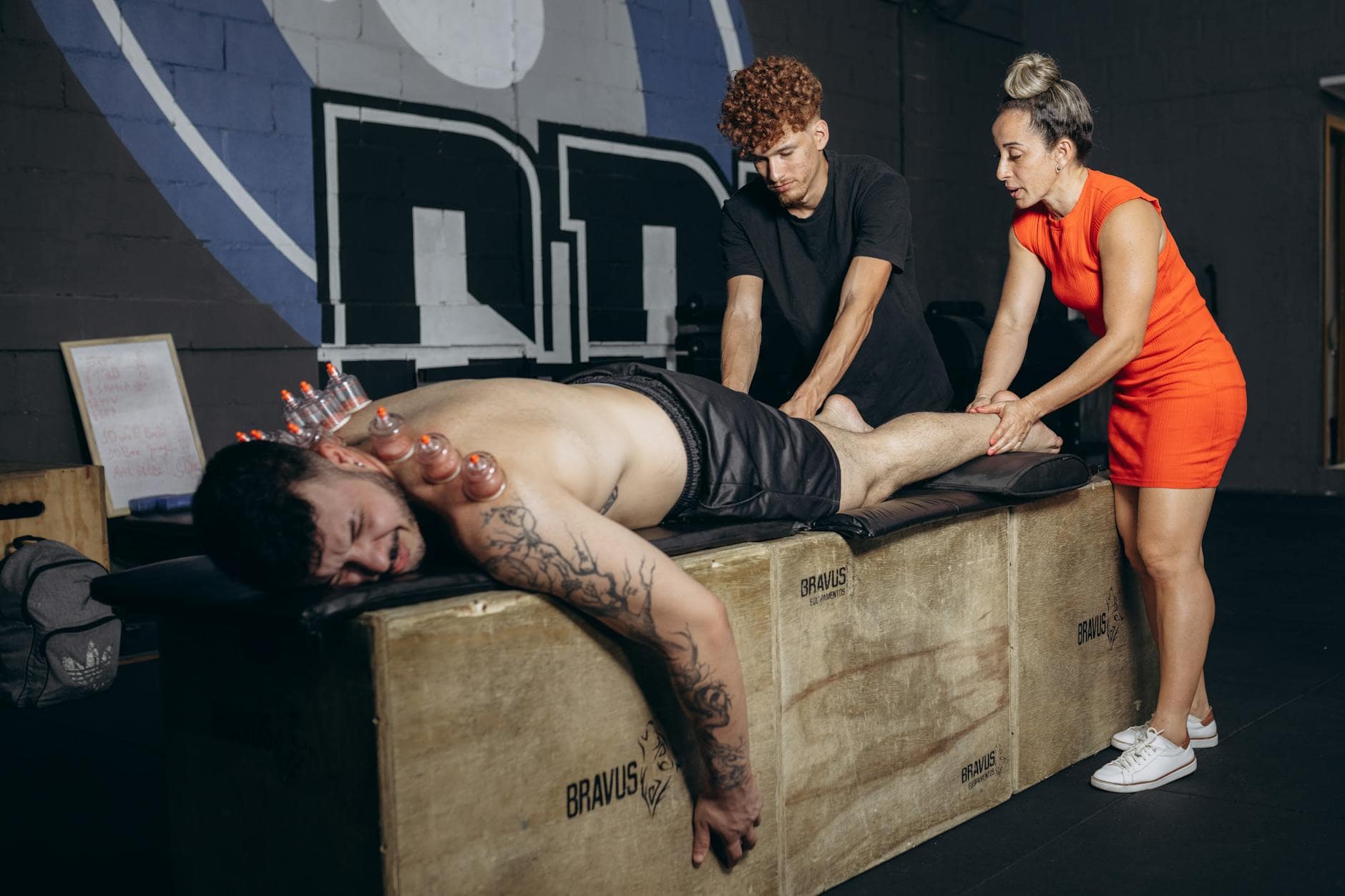
What Happens in a Sports Massage Session?
Your first appointment at Advanced Health starts with a brief assessment — where you’re sore, what you’re training for, any recent injuries, and what you’re trying to achieve.
From there, your therapist will work on the specific areas under load. This might mean:
- Deep tissue work through the glutes and hamstrings for a runner
- Trigger point release through the upper traps and rotator cuff for a swimmer or overhead athlete
- Myofascial release along the IT band and TFL for a cyclist
- Focused work on the lower back and hip flexors for anyone sitting and lifting alternately all day
Sessions typically run 45 or 60 minutes. You’ll leave with advice on what to stretch, what to strengthen, and how soon to come back based on your training load.
When Should You Book?
Before an event: A lighter sports massage 2–4 days before a race or game improves circulation and reduces pre-event tension without leaving you sore on the day.
After an event: Within 24–72 hours post-event, sports massage helps clear metabolic waste, reduce soreness, and speed recovery.
During training blocks: Regular sessions every 2–4 weeks during heavy training help manage cumulative load and catch issues before they become injuries.
When something hurts: If you’ve got a niggle that’s been there for a few weeks, don’t wait. Early treatment resolves most soft tissue injuries in 2–4 sessions. Left alone, they become chronic.
Does Sports Massage Hurt?
Honestly — it can be uncomfortable, especially in overloaded or restricted areas. Your therapist will work within a pressure range that’s productive without being counterproductive. Most people describe it as “good pain” — the kind that feels purposeful.
You may be sore for 24–48 hours afterward, particularly after a first session or after deep work on a problem area. That’s normal and expected.
Health Fund Rebates
Sports massage at Advanced Health is performed by fully qualified remedial massage therapists registered with ANTA and ATMS. Most private health insurance extras policies cover remedial massage — and you can claim on the spot via HICAPS. No paperwork, no receipts.
Check your extras cover before you book. Most Medibank, Bupa, HCF, and NIB policies include it.
Book a Sports Massage in Preston
Advanced Health is located at 107 Plenty Road, Preston — easy access from Thornbury, Reservoir, Northcote, Coburg, and Bundoora.
Same-week appointments are usually available. Book online at advanced-health.com.au/book-online or call us directly.