A long session of weeding, digging or shifting pots can leave your lower back feeling sore later that day. The discomfort may be mild and local, or it may make bending, walking and getting out of a chair surprisingly awkward.
If you are searching for massage near me after a weekend in the garden, pause before booking the first available appointment. The useful question is whether massage suits your symptoms today, and what else should be checked first.
Why gardening can stir up lower back soreness
Gardening often combines repeated bending, twisting, lifting and time spent in one position. An unfamiliar workload can also matter. Two hours of pruning at waist height may feel easy while you are doing it, then become noticeable after you cool down.
That does not tell you exactly which structure is sore. Muscles, joints and other tissues can produce similar symptoms, and pain intensity does not reliably identify the cause on its own. A clinician should ask how the pain started, where it travels and how it changes with movement before recommending hands-on care.
Victoria’s gardening safety guidance recommends changing tasks, resting regularly, avoiding uncomfortable positions and getting help with loads that are too heavy. Those ideas are useful during recovery too: vary the demand instead of repeating the movement that has just aggravated your back.
What can you try in the first day or two?
If there was no significant accident and you have none of the warning signs below, keep moving within a manageable range. Short walks, gentle changes of position and ordinary light tasks are usually more useful than spending the day in bed. You may need to pause heavy digging, lifting or prolonged stooping, then build those tasks back gradually.
Heat can feel comfortable for some people. Protect your skin, use it for a short period and stop if it aggravates the pain. If you are considering pain medicine, ask a pharmacist or GP what is safe for you, especially if you take other medicines or have another health condition.
The Australian Commission on Safety and Quality in Health Care advises people with low back pain to remain active and return to usual activity as soon as feasible. Its Low Back Pain Clinical Care Standard also places active self-management ahead of relying only on passive treatments.
When might remedial massage be reasonable?
Massage may be one option when soreness is local, the presentation is uncomplicated and touch feels tolerable. A session might help you feel more comfortable moving, but it should support an active recovery plan rather than replace one. More pressure is not automatically more useful.
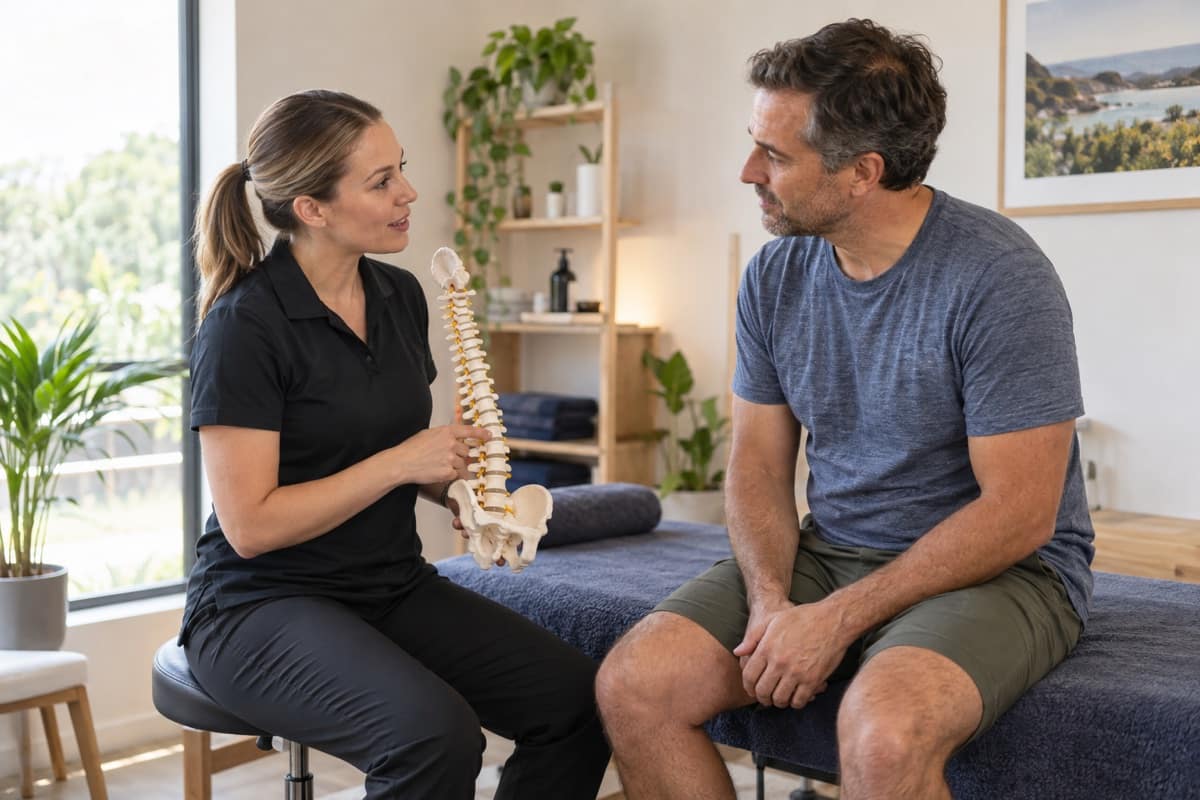
At an Advanced Health remedial massage appointment, the therapist should first ask about the gardening task, the timing of symptoms, previous episodes, medical conditions and what you can or cannot do now. Your answers can change the treatment area, pressure, positioning and whether treatment proceeds at all.
What changes the assessment?
A broad ache across the lower back that eases as you walk presents differently from pain running below the knee with numbness or weakness. A gradual response after repetitive work is different from severe pain after falling from a ladder. Fever, recent illness, osteoporosis, cancer history, pregnancy and medicines that affect bleeding also matter.
The therapist may observe a few comfortable movements and ask what you want to return to. Treatment should be adjusted to your response. You can request lighter pressure, change position, skip an area or stop at any time. If the history suggests massage is unsuitable, a responsible practitioner should refer you for medical assessment.
When should you seek urgent care?
Call 000 or go to an emergency department if back pain occurs with loss of bladder or bowel control, numbness around the groin or genitals, or new loss of feeling or movement in a limb. Urgent assessment is also appropriate after a serious fall or accident, or when severe back pain comes with fever, marked weakness or rapidly worsening neurological symptoms.
Arrange a GP review if pain is worsening, repeatedly disturbing sleep, limiting normal activity or not improving as expected. Unexplained weight loss, feeling generally unwell, or a history that raises concern for fracture, infection or cancer should also prompt medical assessment. Healthdirect’s Australian back pain guide gives clear advice on when to seek help.
You can also read Advanced Health’s overview of lower back pain and care options. A webpage cannot determine the cause of your symptoms, so use it as background rather than a diagnosis.
Returning to the garden without another boom-and-bust day
When symptoms are settling, return in smaller blocks. Alternate jobs that load the body differently: prune, water, then take a short walk rather than doing all the digging at once. Bring pots and tools closer before lifting. Use a bench or raised bed when it reduces prolonged stooping, and ask for help with awkward loads.
Let your response over the next day guide the next session. A small, temporary increase in soreness does not always mean harm, but a clear escalation or spreading leg symptoms is a reason to reduce the task and seek advice.
For people around Preston, Reservoir, Thornbury and Coburg, the practical takeaway is simple: choose an appointment that starts with assessment, and keep the plan connected to the activities you want to resume. You can check the Preston clinic details or book online when the presentation sounds suitable for remedial massage.
Frequently asked questions
Should I wait until the pain is completely gone before moving?
Usually no. For uncomplicated low back pain, gentle activity and a gradual return to normal tasks are generally encouraged. Modify the movements that clearly flare symptoms and seek advice if pain is severe or worsening.
Do I need a scan before a massage appointment?
Most new episodes of non-specific low back pain do not need imaging. A GP may arrange tests when the history or examination suggests a serious cause, fracture or significant neurological problem.
Can massage prevent the soreness returning?
No single treatment can guarantee that. Workload, task variety, recovery, strength, sleep and general health can all influence how you cope with gardening. A useful plan addresses the factors that apply to you.
This article is general information only. It does not provide a diagnosis or replace individual medical advice. If you are unsure about new or changing symptoms, contact a qualified health professional.